My Cat and I Talk Shit SVG, Cat Lover
A Designer’s First Look: Witty, Warm, and Ready for Stitching
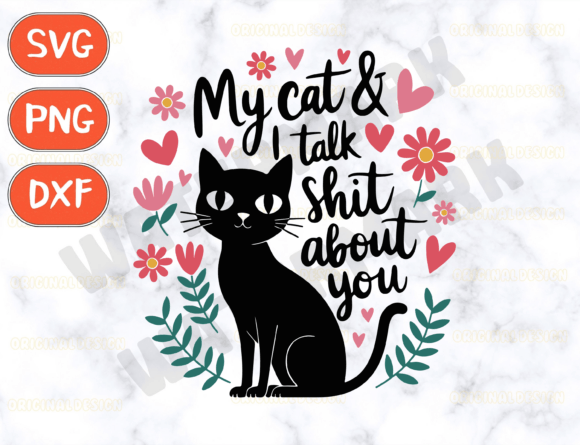
When I opened My Cat and I Talk Shit Svg, Cat Lover, my first thought wasn’t “cute” — it was “relatable.” This isn’t a generic cat silhouette or a pastel paw print. It’s bold, conversational typography with a playful feline accent — the kind of design that makes someone pause mid-scroll on Etsy, smile, and whisper, “Yep. That’s us.” As an embroidery designer who’s stitched everything from nursery quilts to boutique aprons, I immediately pictured this on a heavyweight canvas tote bag — the kind you carry to farmers’ markets or craft fairs, where humor meets handmade authenticity.
Where This Design Naturally Lives (and Thrives)
My Cat and I Talk Shit Svg, Cat Lover is built for personality-driven products. I tested it as a sweatshirt embroidery file for a local cat café pop-up — stitched in matte black thread on heather grey French terry. The result? Instant conversation starter. Customers loved the tone: sassy but sincere, irreverent but warm. It works especially well for:
- Custom apparel like crewnecks, joggers, and denim jackets — where attitude matters more than delicacy
- Tote bag designs and tea towels — high-visibility surfaces where clean lines and readable text shine
- Embroidered patches for backpacks or denim vests — especially when digitized with crisp satin stitch edges
- Holiday embroidery gifts (think “Stocking Stuffer Edition” on baby onesies or linen pillow covers)
- Boutique branding for small shop products — think gift tags, packaging labels, or shelf talkers
It’s not meant for ultra-fine baby embroidery or intricate lace overlays. But for confident, lifestyle-oriented craft business owners? It’s a standout digital embroidery file — especially if your audience values wit over whimsy.
Real Embroidery Behavior: What Happens Under the Needle
Because this is primarily a text-based machine embroidery design with integrated graphic elements, stitch density and letter clarity are make-or-break. On medium-weight cotton twill (like an apron or cap), the design held its shape beautifully — no feathering, no thread nesting. But on thin jersey or stretchy fabric? I’d recommend a cutaway + tear-away stabilizer combo and slightly reduced stitch speed. The phrase “Talk Shit” uses tight kerning and subtle curve in the “S” — charming in vector form, but potentially muddy at under 3 inches tall without careful digitizing.
I also ran it on dark fabric (navy fleece) using light gray thread — and while legible, the contrast wasn’t punchy enough for retail-ready sweatshirt embroidery. For maximum impact, stick to high-contrast thread colors: white on black, black on cream, or charcoal on oat. Avoid pastels unless you’re aiming for soft irony.
Use With Care: Where This Design Needs Extra Attention
This isn’t a “drop-in-and-stitch” file for every surface. Here’s where I slow down:
- Small hoop sizes: The full phrase needs at least a 4×4 hoop comfortably. Trimming it risks losing readability in the “Shit” — which defeats the whole point.
- Curved surfaces like caps: The baseline isn’t arched, so cap embroidery requires manual curve adjustment or a separate digitized version.
- Textured fabrics (terry cloth, bouclé, burlap): Fill stitch areas can sink or blur. Test on scrap first — and consider simplifying background elements if needed.
- Frequent-wash items (baby clothes, kitchen towels): Ensure satin stitch outlines are dense enough to prevent fraying after repeated laundering.
How It Shapes Your Finished Product — Beyond the Stitch
As a designer, I don’t just ask “Will it stitch?” — I ask “What does it say about the maker?” My Cat and I Talk Shit Svg, Cat Lover elevates a handmade product by signaling confidence, voice, and niche alignment. When used well — say, on a limited-run embroidered patch for an indie pet supply shop — it builds brand consistency through shared humor. Buyers don’t just buy a tote; they buy membership in a vibe.
That said, it demands intentionality. Slapping it onto a child’s onesie without considering tone or context could backfire. But on a ceramicist’s studio apron? A baker’s flour-dusted tea towel? A holiday gift set for a fellow cat mom? It lands — warmly, memorably, commercially viable.
Practical Notes Every Embroidery Designer Should Run Through
Before cutting fabric or listing on Etsy, here’s my checklist for My Cat and I Talk Shit Svg, Cat Lover:
- Test on scrap fabric first — especially with your go-to stabilizer and thread combo
- Check thread color contrast in natural light and on-camera (for printable mockups)
- Review stitch density — dense fills hold up better on apparel; lighter runs suit delicate linens
- Confirm hoop size compatibility — if you only use 3×3 hoops, this may require resizing or cropping
- Inspect small details — particularly the tail curl and lowercase “i” dot — do they survive scaling?
- Test black-and-white mockups to gauge visual weight without color distraction
- Compare light vs. dark fabric backgrounds — some sarcasm reads better with bold contrast
- Verify licensing terms before selling finished products or bundling as design assets
Remember: this is a Graphics-category file — not pre-digitized embroidery. You’ll need to convert it properly for your machine. If you’re new to digitizing, pair it with a simple satin border or subtle fill stitch background to boost professionalism without overcomplicating.
Final Thought: A Design That Earns Its Place
In a sea of cutesy cat crafts, My Cat and I Talk Shit Svg, Cat Lover stands out because it doesn’t try to please everyone — it speaks directly to a specific, joyful, slightly chaotic corner of the crafting world. Used thoughtfully, it adds wit, warmth, and commercial appeal to custom apparel, personalized gifts, and small shop merchandise. Just treat it like the intentional design asset it is: test it, tune it, and let it reflect the real, unfiltered charm of cat people everywhere.